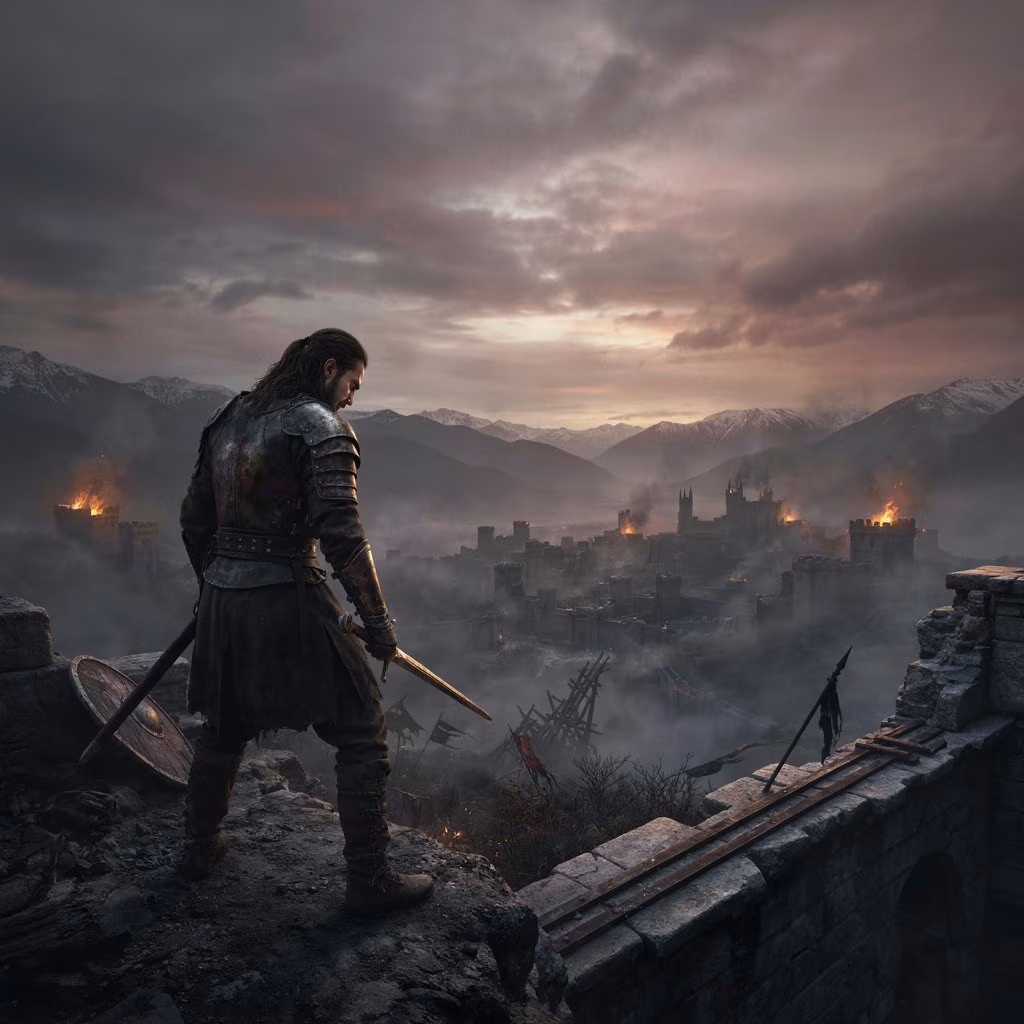
Some fantasy stories make readers feel safe. Grimdark fiction does the opposite. Its worlds are dangerous, its characters are deeply flawed, and every choice can carry a serious cost. Trust can lead to betrayal, power can come with a price, and survival may require decisions that are difficult to defend.
Yet this darker approach has attracted a growing audience of readers who want more than simple heroes and villains. Grimdark fiction creates stories filled with tension, uncertainty, and characters who feel remarkably human.
Its darkness is not there simply to shock readers. It gives the story room to explore power, loyalty, fear, ambition, and survival in a more complicated way.
Understanding what makes these stories different helps explain why grimdark has become such an important part of modern fantasy.
Key Takeaways
- Grimdark fiction combines fantasy with harsh worlds and complicated moral choices.
- Its characters are often neither completely heroic nor completely evil.
- The genre uses consequences and uncertainty to keep readers invested.
- Grimdark can explore real issues such as power, war, loyalty, and survival.
- Dark fantasy and grimdark are related, but they are not the same thing.
What Is Grimdark Fiction?
Grimdark fiction is a type of fantasy that presents a dark, harsh, and often unforgiving world. Characters may face war, violence, political struggles, betrayal, poverty, or difficult choices. Instead of giving readers an easy answer about who is good or evil, these stories often show that people can be both.
The word “grimdark” combines two ideas. “Grim” points to the bleak and difficult nature of the world, while “dark” suggests serious themes and morally uncertain situations. The genre is especially common in fantasy, although similar ideas can appear in other types of fiction.
A simple example would be a story about a soldier who must choose between saving a village and protecting his own family. Either choice could hurt innocent people. There may be no perfect answer, and the character must live with the result.
That focus on difficult choices separates grimdark from many traditional fantasy stories. The goal is not simply to make a fantasy world darker. It is to explore what people do when the world gives them terrible choices.
The Key Characteristics of Grimdark Fiction
Grimdark stories can look very different from one another, but several features often appear again and again.
Morally Gray Characters
One of the biggest features of grimdark is the morally gray character. These characters do not fit neatly into the hero or villain box.
A hero might lie, steal, or hurt someone to achieve a goal. A villain might protect someone they love or believe they are doing the right thing. This does not make their actions automatically good. Instead, it makes the characters harder to understand at first glance.
Readers may disagree with a character’s choices while still understanding why they made them. That creates interesting conflicts because the reader cannot always decide who deserves support.
Dark and Unforgiving Worlds
The setting in grimdark fiction often feels dangerous. War, famine, crime, political conflict, or powerful enemies can make everyday life difficult.
Characters cannot simply assume that everything will work out. A journey across a kingdom might involve real danger, and a political decision could change someone’s life forever.
This kind of worldbuilding makes the story feel tense. Even a small decision can matter because the world does not protect its characters from consequences.
Complex Political and Social Conflicts
Power is another major part of grimdark storytelling. Kings, soldiers, nobles, rebels, merchants, and ordinary people may all want different things.
A war might not happen because one side is purely evil. Several groups may have their own goals, fears, and reasons for fighting. Characters may form alliances and then break them when their interests change.
These conflicts give grimdark stories more depth. The battle is not always about defeating a monster. Sometimes it is about deciding who gets power and what they are willing to do to keep it.
Real Consequences and High Stakes
Grimdark fiction often makes choices matter. A character who betrays a friend may lose that friendship forever. A leader who starts a war may cause suffering that cannot easily be undone.
This creates real stakes. Readers know that actions can have lasting effects, so important moments carry more weight.
Even a victory may feel complicated. A character might win a battle but lose someone they love in the process. That mixture of success and loss is common in the genre.
Limited Hope and Moral Ambiguity
Grimdark stories can be bleak, but they are not required to be completely hopeless. Small moments of kindness, friendship, courage, or loyalty can stand out because they happen in such difficult conditions.
This is where moral ambiguity becomes important. A character may do something cruel for a reason the reader understands, while another character may perform a good act for selfish reasons.
The result is a story where readers have to think instead of simply choosing a side.
How Grimdark Fiction Became Popular
Dark storytelling has existed for a long time, but modern grimdark fiction became especially noticeable through fantasy writers who moved away from traditional ideas of heroic storytelling.
Authors such as Glen Cook and Joe Abercrombie helped shape the modern genre, while George R. R. Martin’s work brought many grim and politically complex ideas to a huge audience.
Modern grimdark also grew alongside a wider interest in darker fantasy, where stories focus on flawed characters and difficult worlds instead of perfect heroes.
As readers became more interested in complicated characters and unexpected stories, grimdark found a strong audience. Its popularity also helped show that fantasy could explore serious subjects while still offering magic, adventure, and imaginative worlds.
Grimdark vs. Other Dark Fantasy Genres
Grimdark is sometimes confused with other types of dark fiction, but the terms are not exactly interchangeable.
Grimdark vs. Dark Fantasy
Dark fantasy is a broad category that includes fantasy stories with frightening, disturbing, or serious themes. A story can be dark because it contains monsters, horror, death, or a frightening atmosphere.
Grimdark usually goes further by focusing on moral uncertainty, harsh consequences, and characters struggling to survive in difficult systems.
In other words, dark fantasy describes a wider group, while grimdark is a more specific style within that larger space.
Grimdark vs. Traditional Fantasy
Traditional fantasy often features a clearer conflict between good and evil. Heroes may have noble goals, villains may threaten the world, and the story may build toward a major victory.
Grimdark fiction often breaks those expectations. The hero may fail, the villain may have understandable motives, and victory may come with a heavy price.
Both styles can tell exciting stories. They simply approach fantasy and morality in different ways.
Grimdark vs. Horror
Grimdark and horror can both be frightening, but they usually create fear in different ways.
Horror often focuses on fear, suspense, monsters, or disturbing events. Grimdark focuses more on harsh realities, difficult choices, power struggles, and survival.
A grimdark story can contain horror, but it does not need to rely on horror to create tension.
Why Do Readers Love Grimdark Fiction?
So why choose a story that promises danger, betrayal, and difficult decisions? For many readers, that is exactly what makes the genre exciting.
It Feels More Unpredictable
Grimdark stories often refuse to follow the path readers expect. A trusted character may betray an ally. A powerful character may suddenly lose everything. A carefully planned victory may turn into a disaster.
Because the usual fantasy rules do not always apply, readers have a stronger reason to keep turning the pages.
It Creates Morally Complicated Characters
Readers often become attached to characters who feel imperfect. A character can make terrible decisions, regret them, and still try to do something better later.
These characters feel closer to real people because real people are rarely completely good or completely bad.
It Makes Every Victory Feel Earned
When success comes easily, it can lose some of its impact. Grimdark fiction often makes characters work hard for every victory.
A character might survive a battle but lose a friend. They might gain power but lose their freedom. These costs make achievements feel more meaningful.
It Explores Real Human Problems
Although grimdark stories may take place in imaginary kingdoms, their themes can feel familiar. They explore greed, fear, loyalty, revenge, ambition, and the struggle for power.
That connection gives the genre more than fantasy adventure. It allows readers to think about real human behavior through an imaginary world.
It Challenges Traditional Ideas of Good and Evil
Grimdark fiction asks readers to look beyond simple labels. Instead of saying, “This person is good,” the story may ask, “What has this person done, and why?”
That question can stay with readers long after they finish the book.
7 Grimdark Fiction Books Worth Reading
If you want to explore the genre, these books offer different examples of its style:
- The First Law by Joe Abercrombie explores flawed characters, war, politics, and sharp moral choices.
- A Song of Ice and Fire by George R. R. Martin combines political struggles, family conflict, war, and unpredictable character journeys.
- The Black Company by Glen Cook follows soldiers who work for powerful forces while dealing with difficult choices.
- The Poppy War by R. F. Kuang explores war, power, revenge, and the terrible cost of conflict.
- The Broken Empire by Mark Lawrence follows a dangerous central character through a violent and morally complicated world.
- Prince of Nothing by R. Scott Bakker combines military conflict, philosophy, politics, and complex characters.
- The Blacktongue Thief by Christopher Buehlman mixes dark fantasy, humor, danger, and an unpredictable journey.
These books differ in tone and style, so readers can see that grimdark does not have to follow one exact formula.
Is Grimdark Fiction Right for Every Reader?
Grimdark may not suit readers who prefer light adventures, simple heroes, or stories where good always defeats evil. Many books in the genre contain violence, death, disturbing situations, and emotionally difficult themes.
However, readers who enjoy complex stories may find the genre rewarding. If you like asking why characters behave a certain way or enjoy stories where you cannot predict what happens next, grimdark may be worth exploring.
Checking a book’s content warnings and description before reading can also help you choose a story that matches your comfort level.
How to Tell If a Book Is Grimdark
If you are unsure whether a fantasy book belongs to the genre, look for several common signs:
- The world is harsh and dangerous.
- Characters have conflicting morals and motivations.
- Important choices have serious consequences.
- Power, survival, or revenge drives major conflicts.
- The story avoids simple good-versus-evil solutions.
One feature alone does not automatically make a book grimdark. A story can have violence or a dark setting without fitting the genre. It is usually the combination of tone, character choices, moral uncertainty, and consequences that creates the grimdark feel.
The Lasting Appeal of Grimdark Fiction
Grimdark fiction has a simple idea at its heart: people are complicated, and difficult worlds can reveal sides of them that easier stories cannot.
Its characters make mistakes. Its worlds punish careless choices. Its victories often come with a cost. Yet that does not mean these stories have nothing positive to offer. Friendship, courage, loyalty, and hope can feel even more powerful when they survive in a world that constantly tests them.
That is why readers continue to return to grimdark fiction. It offers fantasy worlds filled with adventure, but it also asks difficult questions about people and the choices they make.
Final Thoughts
Grimdark fiction is more than fantasy filled with darkness. It is a style that puts characters under pressure and asks what they will do when every choice has a cost.
That is what makes the genre so interesting. You may not always know who to trust, who deserves forgiveness, or how a story will end. But those questions keep the pages turning.
For readers who want fantasy that feels unpredictable, challenging, and deeply human, grimdark fiction offers a world where even the smallest choice can change everything.
For more fiction author updates, book insights, and writing-related content, visit Barry Spaulding, a fiction author sharing updates and stories for readers interested in different genres